ABERDEEN, S.D. – Helping South Dakotans remain active, healthy and independent as they age is a challenge that reaches every community—including those across northeastern South Dakota.
Northern State University faculty member Dr. Chelsee Shortt is part of a team of South Dakota Board of Regents experts awarded funding through the Governor’s Research Center program to develop the Governor’s Research in Aging Center of Excellence, or GRACE.
The interdisciplinary team, led by Dr. Lisa MacFadden from the University of South Dakota, brings together faculty from Northern State University, University of South Dakota (Dr. Becca Jordre), Dakota State University (Dr. Austin O’Brien) and South Dakota State University (Dr. Christopher Robbins) to advance research, education and innovation focused on healthy aging and helping older South Dakotans maintain movement, function and independence.
As part of GRACE, Dr. Shortt, associate professor of exercise science and physical education and chair of Northern’s Department of Sports Sciences, will help connect Northeastern South Dakota with fall prevention strategies, exercise interventions, and research while creating hands-on learning opportunities for Northern students.
“The GRACE project creates an incredible opportunity to bring meaningful research, education, and innovation to Northeastern South Dakota,” Shortt said. “At Northern, our students will gain hands-on experience with emerging technologies and contribute to solutions that support healthy aging in rural communities.”
One in three older South Dakotans falls each year, creating significant health challenges for older adults and additional demands on rural health care providers. GRACE will bring together expertise in biomedical engineering, movement science, physical therapy, artificial intelligence, cybersecurity, public health and community education to address those challenges.
The initiative will include physical locations in Rapid City, Sioux Falls and Aberdeen, along with mobile and virtual resources designed to extend the center’s reach to communities across South Dakota. The planned Aberdeen location will provide an opportunity to bring GRACE research, education and resources directly to northeastern South Dakota.
Northern’s participation also will give students opportunities to apply their knowledge to real-world challenges affecting adults in South Dakota.
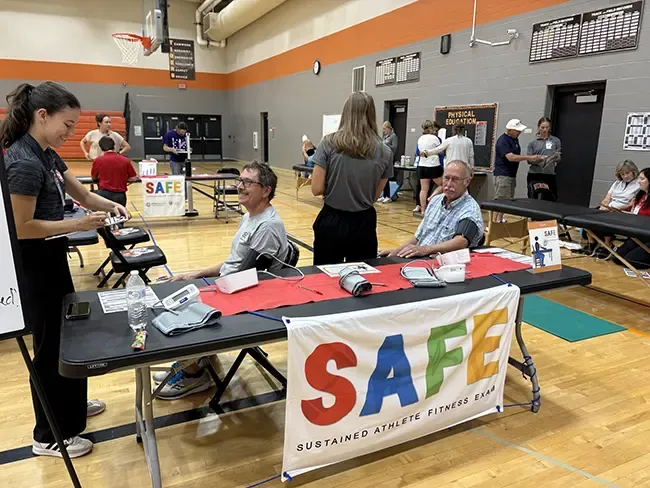
GRACE has completed its first phase of development, which included data collection, pilot initiatives and physical performance testing at the South Dakota Senior Games. The new funding will allow the team to formalize partnerships, expand community relationships and develop additional infrastructure for the center.
“GRACE allows us to build opportunities for our students that can shape their education, their careers, and the future of rural health in South Dakota,” Shortt said.